
Navratri is more than a festival of devotion, colourful celebrations and traditional rituals. It is also a time to slow down, reflect on life and reconnect with what truly matters. The nine days dedicated to the worship of Goddess Durga offer an opportunity to bring more awareness, gratitude and positive intentions into everyday life.
For many people, the festival is a reminder to let go of unhelpful habits, practise patience and make time for spiritual growth. Simple activities such as daily prayer, meditation, mantra chanting and journaling can help create a meaningful routine during these nine days.
Whether you celebrate Navratri with traditional puja, family gatherings or quiet moments of reflection, you can make the festival more personal by choosing rituals that connect with your beliefs and daily life.
At Energy Awakening, the connection between self-awareness, meditation and personal development is an important part of the journey towards a more balanced life. Here are nine meaningful Navratri rituals you can practise to encourage inner peace, self-reflection and spiritual growth.
1. Begin Your Day With Prayer and Puja
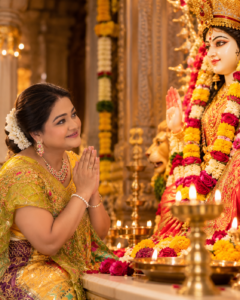
Daily prayer is one of the simplest ways to begin Navratri with a calm and focused mind. You do not need an elaborate arrangement to make the moment meaningful. A clean prayer space, a diya, fresh flowers and a few minutes of sincere prayer can be enough to create a sense of connection with your faith.
Set aside a regular time each morning to offer your prayers. You can recite a familiar mantra, read a short devotional passage or sit quietly and express gratitude.
The purpose is not to complete a ritual in a hurry. It is to give yourself a few peaceful moments before the day’s responsibilities begin. With regular practice, this small routine can become a reminder to approach daily situations with patience, kindness and awareness.
2. Practise Fasting With Care and Intention

Fasting is an important tradition for many devotees during Navratri. For some, it represents devotion and discipline; for others, it is a way to simplify their routine and spend more time on prayer and reflection. Practices vary between families and communities.
If fasting is part of your tradition, approach it thoughtfully rather than treating it as a test of endurance. Follow a suitable eating routine, drink enough fluids and avoid pushing yourself beyond your physical limits. People with medical conditions, those who are pregnant, or anyone taking medication that may be affected by fasting should seek appropriate medical advice first.
You can also practise restraint without fasting from food. For example, try reducing unnecessary screen time, avoiding gossip or taking a break from habits that leave you feeling distracted.
The deeper intention is to practise awareness and self-discipline in a way that respects your health and circumstances.
3. Make Time for Meditation and Mantra Chanting
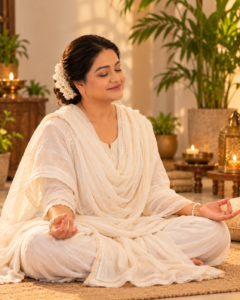
Navratri can be a good opportunity to establish a simple meditation routine. Even five to ten minutes of quiet time can give you a chance to pause and notice what is happening in your mind.
Find a comfortable place, sit with your back supported and bring your attention to your breathing. If thoughts arise, notice them without judging yourself and gently return your attention to the breath.
If mantra chanting is part of your practice, you can repeat a familiar devotional mantra at a comfortable pace. The repetition can give your attention a steady focus and make the session feel more meaningful.
Sara Sherwal, founder of Energy Awakening, works with meditation and personal development, helping people explore practical ways to bring greater awareness into their everyday routines. Her work connects meditation with broader themes of self-reflection and personal growth.
Remember that meditation is a practice, not a competition. You do not need to stop every thought or achieve a particular experience. Simply showing up consistently is a worthwhile beginning.
4. Write Your Thoughts in a Journal

Spiritual growth often begins with honest reflection. Yet, in the middle of work, family responsibilities and everyday distractions, it can be difficult to understand what you are feeling or what needs to change.
Journaling gives you a private space to put your thoughts into words. During Navratri, spend five minutes each evening writing about your experiences, emotions and intentions.
You can use these questions to get started:
- What am I grateful for today?
- Which situation tested my patience?
- What did I learn about myself?
- Is there a habit or thought I want to change?
- What is one positive action I can take tomorrow?
There is no need to write perfectly or make your journal sound impressive. Be honest with yourself.
After nine days, look back at your entries. You may notice recurring concerns, changes in your priorities or small improvements in the way you respond to daily challenges. These observations can help you decide what you want to carry forward after the festival.
5. Create a Clean and Peaceful Prayer Space
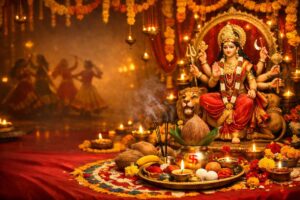
The space around you can influence how easily you settle into a daily ritual. Preparing a clean and peaceful prayer corner can make Navratri puja feel more intentional.
Choose a suitable area in your home and keep it tidy. Depending on your tradition, you may decorate it with flowers, a kalash, a picture or idol of Goddess Durga, and a diya. You can also keep your prayer book or meditation cushion nearby so that everything is ready when you need it.
The ritual of cleaning and arranging the space can itself become an exercise in mindfulness. Instead of rushing through the task, pay attention to each small action.
You can extend this idea to the rest of your home by clearing unnecessary clutter from one area at a time. The goal is not to make your home perfect. It is to create a setting in which you can pause, reflect and practise your beliefs comfortably.
If you light a diya or candle, place it securely away from curtains and other flammable materials, and never leave it unattended.
6. Take Part in Garba and Community Celebrations

Spirituality does not always mean sitting quietly. For many families, Navratri is also a time for music, dance, shared meals and community celebrations.
Garba and other traditional gatherings bring people together through movement, rhythm and devotion. Participating in these activities can help you feel connected to your culture, family and community.
You do not need to be an experienced dancer to take part. Join a local celebration, learn a few simple steps or enjoy devotional music with loved ones.
As you participate, try to remain present rather than worrying about how you look or whether you are performing perfectly. Appreciate the music, the shared experience and the opportunity to celebrate with others.
If attending a large event is not possible, you can create a small celebration at home with family or friends. The important part is to take part in a way that feels comfortable and meaningful to you.
7. Practise Kindness, Gratitude and Giving
Navratri can also be a reminder to extend care beyond your own spiritual routine. Devotion becomes more meaningful when it is reflected in the way you treat other people.
Try to complete one thoughtful act each day. It could be helping a family member, checking on a friend, sharing food, donating useful items or giving someone your full attention when they need to talk.
You can also practise gratitude by acknowledging the people who support you. A sincere thank-you message or a few kind words can make a difference in an ordinary day.
These actions do not need to be expensive or dramatic. Often, the smallest gestures are the easiest to maintain.
At the end of each day, ask yourself whether your actions reflected the values you want to live by. This simple question can help connect your spiritual intentions with your everyday behaviour.
8. Learn About the Nine Forms of Goddess Durga
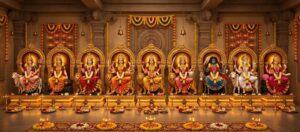
Each day of Navratri is traditionally associated with a form of Goddess Durga. Many devotees use the nine days to learn about these forms, offer prayers and reflect on the qualities represented by the stories and traditions.
You can make this practice part of your daily routine by learning about one form of the Goddess each day. Read a devotional story, listen to a traditional explanation or discuss its meaning with family members.
You may also use each day as a prompt for personal reflection. For example, think about courage when considering challenges, patience when dealing with delays, or compassion when responding to someone else’s difficulties.
Different traditions may explain the symbolism in different ways, so approach the subject with respect for your family’s customs and beliefs.
This ritual offers a way to connect cultural learning with personal reflection. Instead of treating the nine days as a series of tasks, allow each day to give you one meaningful idea to consider.
9. Reflect on Your Journey and Set Positive Intentions
As Navratri comes to an end, take time to reflect on what the nine days have meant to you.
You may have prayed more regularly, made time for meditation, become more aware of your emotions or spent more time with family. Even if your routine was not perfect, notice the moments when you felt connected, calm or motivated to make a positive change.
Write down three things you learned about yourself and one habit you would like to continue.
Keep your intentions realistic. Instead of promising to change everything at once, choose a small action you can repeat, such as five minutes of meditation, a daily gratitude note or a more mindful start to your morning.
If you are interested in personal reflection through numerology, you may also explore how traditional number interpretations are used to consider personal patterns and goals. Energy Awakening offers numerology guidance through Sara Sherwal for people who want to learn more about this practice.
Numerology is a belief-based interpretive practice rather than a scientifically established way to predict outcomes. Use it as an opportunity for reflection, not as a substitute for your own judgment.
The most meaningful outcome of Navratri is not how many rituals you complete, but whether you carry greater awareness, kindness and intention into your everyday life.
Frequently Asked Questions
1. Which Navratri rituals can help with inner peace?
Prayer, meditation, mantra chanting, journaling and gratitude are common practices that encourage reflection and a sense of calm. Choose rituals that fit your beliefs and practise them consistently.
2. How can I practise self-reflection during Navratri?
Set aside a few minutes each day to write about your emotions, habits, experiences and goals. Ask yourself what you have learned and which positive changes you would like to make.
3. Is fasting necessary during Navratri?
No single fasting routine suits everyone. Many devotees fast according to their family or religious traditions, while others observe the festival through prayer, meditation, charity and devotional activities. Always consider your health and nutritional needs.
4. Can I practise Navratri rituals at home?
Yes. You can pray, meditate, chant mantras, keep a journal, learn about Goddess Durga and practise kindness at home. Follow the customs that are meaningful to you and your family.
5. How does meditation fit into Navratri celebrations?
Meditation gives you time to pause, observe your thoughts and focus on the present moment. You can practise it before morning prayers or at the end of the day.
6. How is numerology connected with spiritual growth?
Numerology is a traditional belief system that interprets numbers associated with names and birth dates. Some people use it as a framework for reflecting on personal patterns and goals, although it is not a scientifically established method for predicting life outcomes.
7. Can I consult a numerologist in Sydney or a numerology expert in Melbourne online?
Online consultation options can make numerology guidance accessible to people across Australian cities. You can contact Energy Awakening to ask about available sessions and choose an option that suits your needs.
Book Your Numerology Consultation
Take the next step in understanding your numbers with personalised guidance from Sara Sherwal.
Book Your Consultation
Call: 0426 532 555
Email: contactenergyawakening@gmail.com
Meet Our Founder
Sara Sherwal is the founder of Energy Awakening and a passionate mentor dedicated to helping people create positive life transformations. Through her expertise in Numerology, Vastu, Meditation, and holistic wellness, she has guided countless individuals toward greater clarity, confidence, balance, and lasting personal growth.
